Two wheels. Endless reasons.
The United Nations has recognized June 3 as World Bicycle Day since 2018. It is a simple celebration of something most of us learned as children: riding a bike is one of the best things you can do for yourself and for the people around you.
The World’s Favorite Vehicle
The bicycle may be one of the most remarkable inventions ever created. About 130 million new bikes are manufactured each year. That’s more than four bicycles produced every second, around the clock.
In fact, bicycles are made at roughly twice the rate of cars. Today, an estimated two billion bikes are in use worldwide.
Those numbers are a reminder that cycling is far from a niche activity. The bicycle remains the most widely used vehicle on the planet, and its popularity continues to grow. The global cycling industry was valued at more than $75 billion in 2026 and is expected to keep expanding in the years ahead.
~130M
BIKES PRODUCED
EVERY YEAR WORLDWIDE
2×
MORE BIKES MADE
THAN CARS EACH YEAR
2B+
BICYCLES IN USE
AROUND THE WORLD TODAY
Perhaps the most remarkable thing about the bicycle is its versatility. It serves commuters heading to work, athletes chasing new goals, children learning to ride, and retirees exploring new places. Few inventions have such a wide reach. The bicycle means something different to every rider, which may be one reason it has remained popular for generations.
More Than One Kind of Ride
When most people think of cycling, they picture road bikes: the lightweight, fast machines seen in the Tour de France or on weekend rides. Road cycling is the largest segment of the market, but it is far from the whole story.
Today, cycling encompasses a wide range of disciplines, each with its own culture, community, and riding style. The bicycle has evolved into many forms, designed for different riders, different terrain, and different ways of enjoying the ride.
ROAD CYCLING
The most common form of cycling. Focused on endurance, speed, and distance on paved roads. Ranges from casual rides to professional racing. Relies on safe roads, bike lanes, and shared paths.
TRAIL & ENDURO
One of the fastest-growing forms of mountain biking. Riders tackle technical descents with enough climbing to get there under their own power. Accessible and highly social.
PUMP TRACK & DIRT JUMP
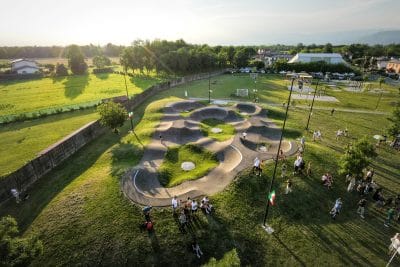
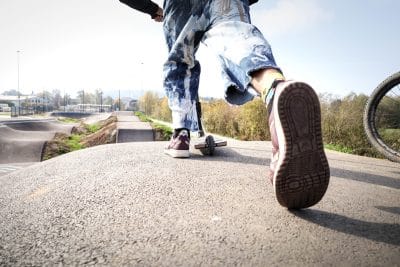
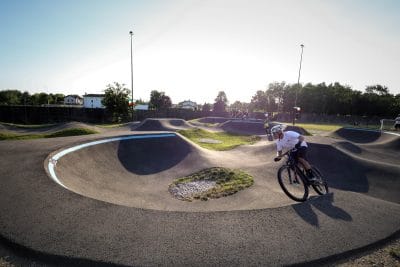
Compact, skill-focused riding on purpose-built tracks and jumps. Welcomes riders of all ages and abilities. Develops balance, flow, and bike handling skills faster than almost any other format.
CROSS COUNTRY (XC)
Off-road endurance riding on natural or purpose-built single-track trails. An Olympic discipline since Atlanta 1996. Demands technique, fitness, and well-designed trail systems
GRAVEL & ADVENTURE
Riding that blurs the line between road and off-road cycling. One of the fastest-growing cycling categories in the world. Connects riders to landscapes that road and mountain bikes alone cannot reach.
DOWNHILL (DH)
High-speed descents on steep, technical terrain. One of the most exciting forms of cycling to watch. Relies on purpose-built gravity trails and bike parks.
BMX
BMX Racing has been an Olympic sport since the 2008 Beijing Games. BMX Freestyle was added to the Olympic program for Tokyo 2020. One of cycling’s most creative and acrobatic forms, and often a gateway for new riders.
URBAN & COMMUTER
Off-road endurance riding on natural or purpose-built single-track trails. An Olympic discipline since Atlanta 1996. Demands technique, fitness, and well-designed trail systems
These forms of cycling share two wheels and pedals, though pump tracks sometimes require little pedaling. Yet they represent very different ways of experiencing the world on a bike. A child who learns to ride on a pump track may grow into a trail rider or BMX racer. A commuter who starts cycling to work may discover gravel riding on the weekends. The entry points are everywhere. The common thread is the habit of riding.
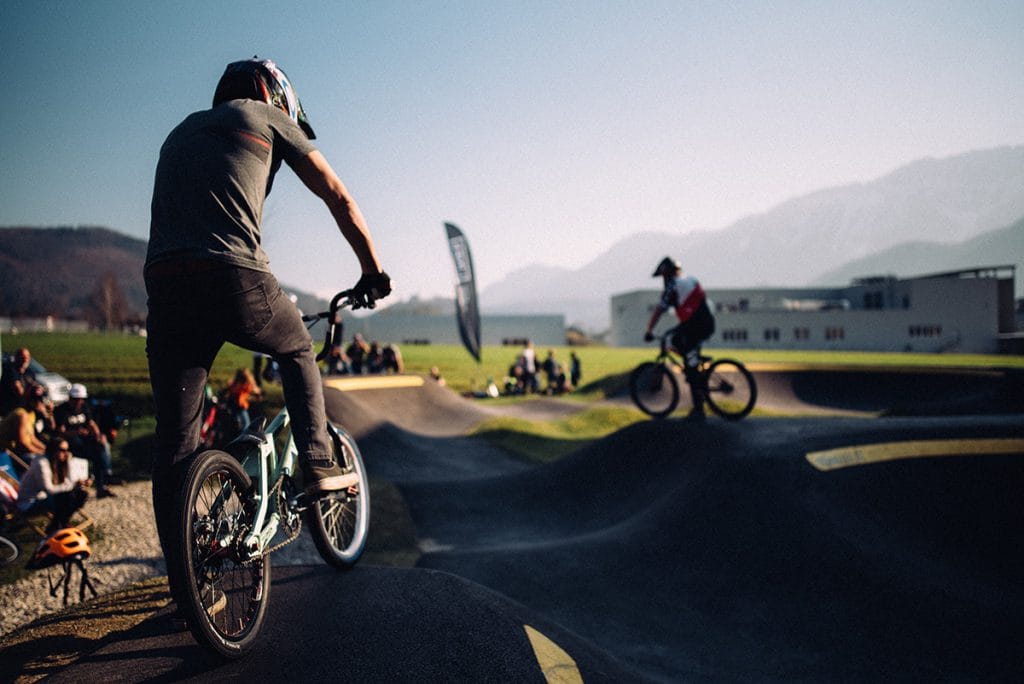
Good for the Body. Good for the Mind.
Across all of these forms of cycling, the health benefits are consistent and well established. Cycling improves cardiovascular fitness, strengthens muscles, and enhances balance and coordination without putting undue strain on the joints. It appeals to young children, teenagers, and adults alike, making it one of the few activities people can enjoy throughout their lives.
Cycling also offers something that gym workouts and structured exercise often struggle to match: people genuinely enjoy it. The combination of movement, fresh air, skill progression, and fun keeps riders coming back. Over time, that consistency can lead to meaningful improvements in long-term health.
Safer Riders Start Somewhere
Riders who develop their skills on pump tracks, bike trails, and skills parks often become more confident wherever they ride. Balance, spatial awareness, and bike handling skills develop through repetition in a controlled environment, long before riders encounter traffic or technical terrain. Communities that invest in quality places to ride often see more people cycling and more confident riders.
Places that make it easy
People are far more likely to ride when they have great places to ride. A well-placed pump track, a flowing trail through a park, or a skills area that welcomes beginners can make the difference between good intentions and a lasting habit.
This is what we have seen across more than 350 projects in 18 countries. Build the right space in the right place, and people will come. Children arrive on balance bikes. Parents stay and ride. Teenagers find a reason to be outside. Older riders discover they have not lost the habit, only the opportunity.
Who are we?
Since building the first asphalt pump track in Central Europe, a 900 m² facility in Ljubljana that remains in daily use more than a decade later, Alliance ASE has designed and built pump tracks, bike trails, urban skills parks, and skateparks for communities across Europe and beyond. The idea is simple: build the right space in the right place, and people will use it.
Thinking About a Project?
Get in touch — We would be happy to discuss what is possible.