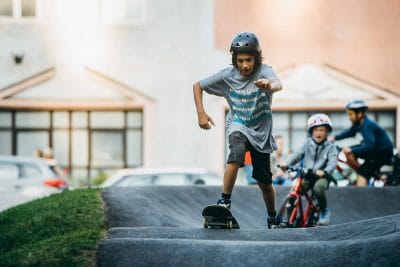
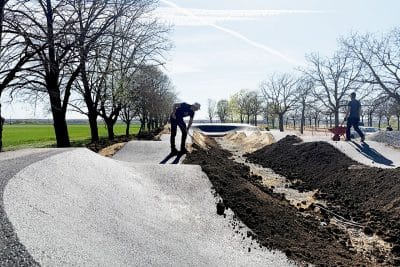
Municipalities with pump tracks have better bike riders
This official statement from the Swiss police sounds logical: “Communities with pump tracks have better cyclists.” We still wondered what defines a good cyclist. Our conclusion: Not just someone who knows how to ride a bike – but someone who has developed additional skills on the bike. So, someone who is safe on the bike.
More and more cities are working to promote cycling, active mobility, and healthier lifestyles. One simple but effective way to support this goal is to give people a safe place to practise their riding skills — and a pump track is one of the best tools available.
A pump track creates a controlled, enjoyable environment where children, youth and even adults can improve their balance, confidence, and bike-handling skills. And as skills improve, so does the likelihood that people will choose a bike for daily travel or recreation.
Why Cycling Skills Matter for Cities
Encouraging cycling is not just about building bike lanes. It is also about helping people feel safe and confident on a bike. Many children and adults avoid cycling because they lack experience or don’t feel comfortable riding in traffic.
A pump track provides the missing link: a place where people can learn, practise, and build confidence before they ride on the street or in shared spaces.
Stronger bike skills lead to:
- More active children and families
- Greater use of local cycle routes
- Fewer accidents and injuries
- Higher confidence among new cyclists
- A healthier, more mobile community
Municipalities that invest in cycling need spaces that support these outcomes — and pump tracks do exactly that.
How Pump Tracks Create Better Bike Riders
>> They Build Balance and Coordination
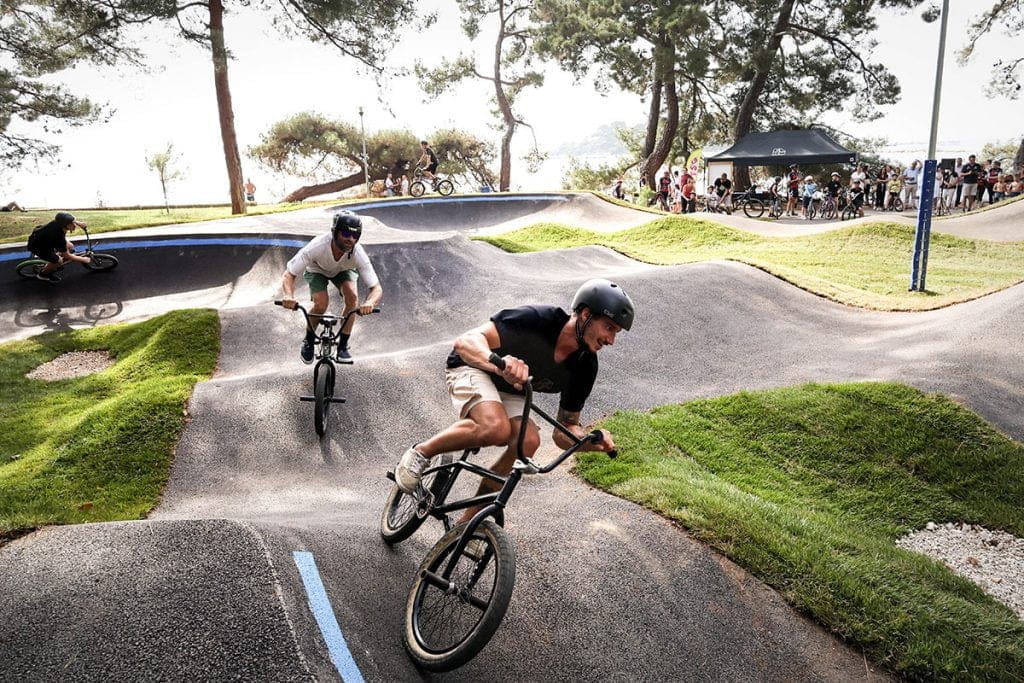
The flow of a pump track — its waves, turns, and rhythm — helps riders naturally improve their balance, coordination, and bike handling. These skills are essential for safe cycling in daily life.
>> They Create a Safe Space to Learn
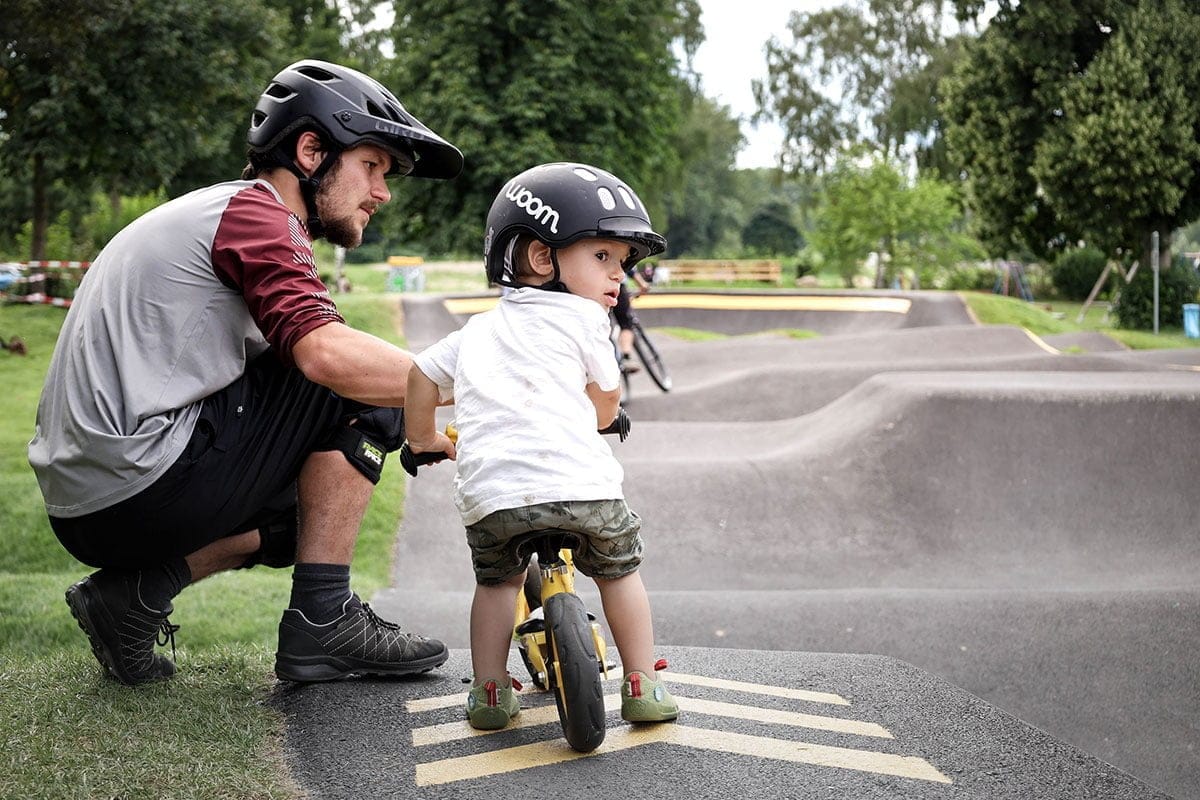
For beginners, riding in traffic or even in a busy park can feel intimidating. A pump track offers a dedicated, car-free, low-risk environment where new riders can practise at their own pace.
>> They Encourage Repetition Through Fun
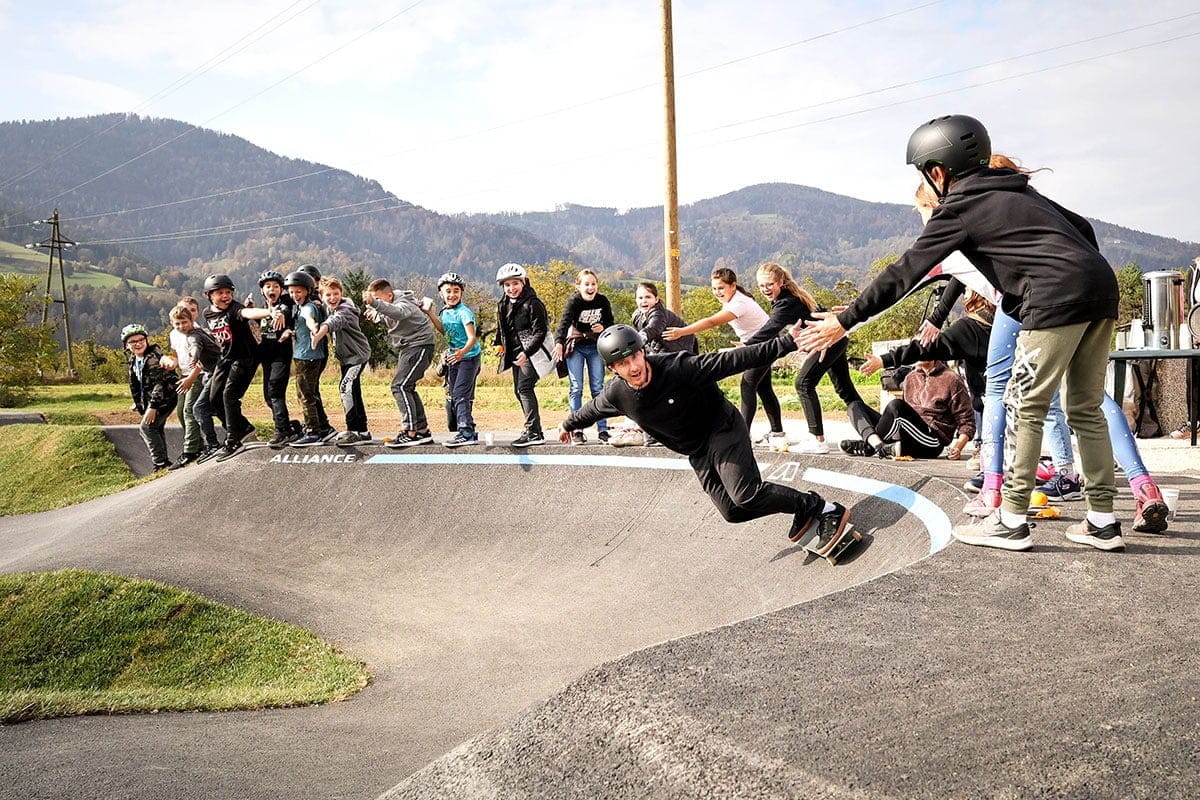
Because pump tracks feel like play, riders practise more often and for longer. This makes learning easy and enjoyable — especially for children.
>> They Support All Wheeled Users
Pump tracks are not only for bikes. Scooters, balance bikes, skateboards, wheelchairs, and adaptive bikes can all use them. This makes the facility inclusive and useful for a wide range of community members.
>> They Help Riders Develop Traffic-Ready Skills
Cornering, braking, speed control, line choice, and handling uneven surfaces — all these skills transfer directly to everyday cycling. Riders who learn on a pump track become safer, more confident cyclists elsewhere.

Why Municipalities Benefit From Skill-Building Pump Tracks
A pump track is more than a playground — it is a public health and mobility investment.
Municipal benefits include:
- More confident young cyclists entering the road system
- Improved safety thanks to better bike-handling skills
- Higher participation in active travel and cycling programs
- A popular, low-maintenance recreational asset
- Stronger community engagement
- Support for long-term mobility and sustainability goals
Because pump tracks are durable and low-maintenance, they deliver value for many years while supporting both recreation and mobility priorities.
From Better Riders to Better Cities
Good cycling skills lead to safer roads, healthier residents, and more active communities. By providing a fun and inclusive place to practise, pump tracks help cities build better bike riders — and better futures.
Want to Help Your Community Become More Active and Confident?
We design pump tracks that support skill development, active mobility, and community wellbeing.
Contact us today to explore pump track options or request a tailored proposal for your municipality.
*Source: International Association for Sports and Leisure Facilities (IAKS) Conference: https://iaks.sport/news/denmark-leading-way-active-living at the presentation “The importance of physical activity opportunities for outdoor physical activity” (Bjarne Ibsen, Professor at Centre for Sports, Health and Civil Society, University of Southern Denmark)