Green, Greener, Pump Track
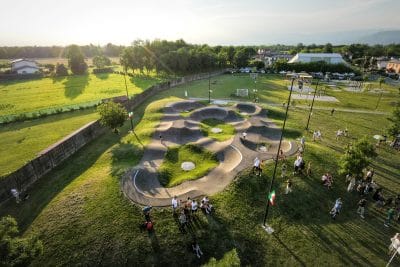
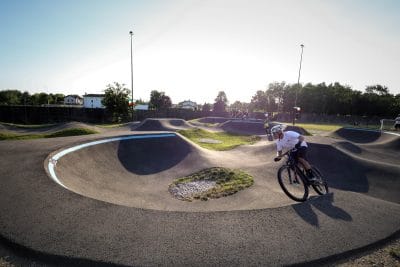
Green space along the outer berms and infield areas does far more than enhance the look of a pump track; it helps protect the investment and extend the track’s life. Smart landscaping strengthens the structure, prevents erosion, and keeps the riding surface performing at its best. If you have ever wondered why landscaping is such an important part of pump track design, here is what you need to know.
Why Greening Your Pump Track Matters
While pump tracks are valued for their low-maintenance design, proper landscaping remains critical to their success. Healthy, well-maintained grass is more than decorative; it helps protect and preserve the track. The root systems of grass on the side slopes help prevent erosion. Without that natural reinforcement, heavy rain and runoff can gradually erode the berms and weaken the track’s structure. Healthy, well-maintained grass stabilizes the soil, protects the edges, and helps preserve the integrity and safety of the riding surface. This allows riders to enjoy the track for years to come.
Beyond structural benefits, landscaping also enhances the space’s overall atmosphere. Lush grass, trees, and natural plantings create a welcoming and visually appealing environment for riders and spectators. Research shows that being surrounded by greenery can reduce stress, improve mood, and sharpen focus. When the thrill of riding is combined with natural surroundings, the result is an experience that refreshes both body and mind. To support long-term success, consider incorporating an irrigation system into your landscaping plan. A well-designed watering system provides consistent hydration for the grass, strengthens durability, and reduces maintenance challenges over time.
Choosing the Right Greening Option: Sod or Seeding
When establishing grass on side slopes and infield areas, two primary methods are commonly used in the United States: sod installation or seeding.
Each option offers distinct advantages. Understanding the differences will help you choose the best fit based on your budget, timeline, and long-term goals.
Sod: Instant Impact for a Picture-Perfect Pump Track
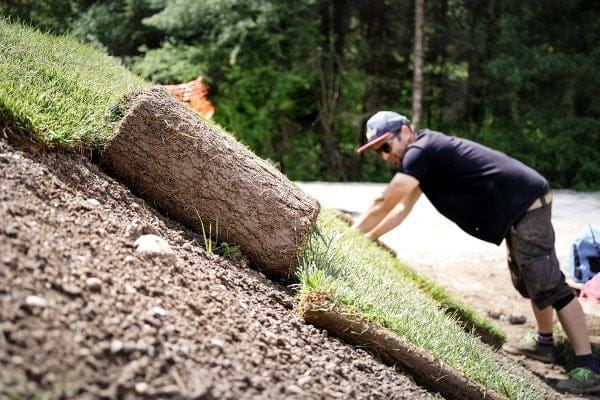
Sod, which is pre-grown natural grass harvested from a farm and delivered in rolls, provides an efficient way to create an instantly green pump track. Its biggest advantage is immediate visual impact. As soon as it is installed, the track looks finished and polished, making it especially appealing for communities preparing for a grand opening or public event.
While sod delivers quick results, it does come with a higher upfront cost than seeding and still requires proper root establishment. Under the right conditions, roots typically take about two weeks to fully anchor. During that time, consistent watering is essential, foot traffic should be avoided, and the area should be monitored closely. With proper care, sod develops into a durable, vibrant surface that protects slopes and enhances the riding environment for years to come.
Seeded Grass: A Sustainable and Budget-Friendly Solution
Seeding grass is an alternative method for greening a pump track, offering a natural appearance and cost advantages. The process involves preparing the soil, spreading grass seed, and providing regular maintenance to support germination and growth. Seeded grass creates an organic look that blends well with the surrounding area and is generally more cost-effective than sod. However, it does come with challenges, including a longer establishment period, the potential for patchy growth in high-use areas, and the need for ongoing maintenance to ensure a healthy and durable surface.

Beyond Grass, Explore Alternative Greening Options
When it comes to preventing erosion and enhancing the appearance of the slopes around your pump track, there are additional alternatives to traditional grass worth considering. While grass remains a popular choice, exploring other options can provide unique benefits and create a visually engaging environment. Looking beyond grass can help you discover greening solutions that better suit your climate and maintenance goals.
Beat the Heat With Shrubs
One effective option is using shrubs, which can enhance visual appeal while also serving as a natural barrier that discourages users from walking on the slopes. Although shrubs may take longer to become fully established, they offer a practical alternative, especially in warmer climates where watering grass during dry seasons may not be realistic. By incorporating shrubs into your landscaping plan, pump track communities can create attractive, low-maintenance green spaces that adapt well to varying environmental conditions.

Spray and Grow with Hydroseeding
Hydroseeding is an efficient method for establishing grass on pump track berms. It involves spraying a slurry mixture of seed, fertilizer, mulch, soil amendments, stabilizers, and moisture-retaining materials directly onto the soil using specialized equipment. This process promotes even coverage, supports strong germination, and helps control erosion on sloped surfaces.
Because hydroseeding requires commercial equipment, it is typically performed by a professional landscaping contractor. It is especially effective for covering large areas quickly and creating consistent growth across berms where durability and erosion control are essential.
Beyond Nature, Artificial Solutions
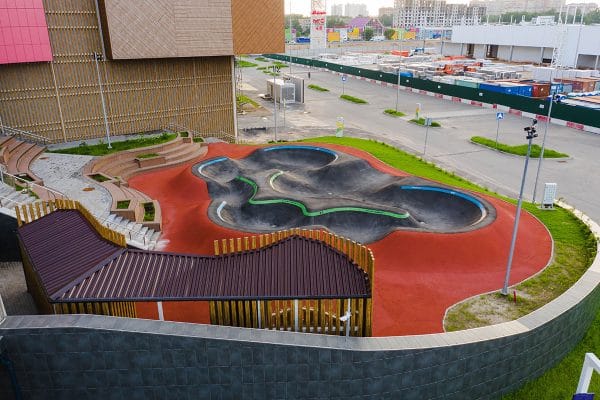
In situations where natural landscaping is not practical, artificial materials can provide reliable erosion control and long-term durability. Options such as EPDM rubber surfacing or synthetic turf can help stabilize berms while maintaining a clean and finished appearance. These alternatives may be particularly useful in regions with extreme heat, limited water availability, or heavy use.
By selecting the right surface solution, communities can protect the pump track’s structural integrity while preserving an attractive, low-maintenance environment.
Go Green, Make Your Pump Track Last
Greening a pump track is more than a design choice; it is a long-term investment in durability, performance, and community appeal. Well-planned landscaping protects the track from erosion while creating an attractive setting that enhances the experience for riders and spectators. Sod provides immediate results and convenience, though it comes with a higher upfront cost and requires careful root establishment. Seeding offers a more budget-friendly option, but it takes longer to establish and requires ongoing maintenance. Alternatives such as shrubs or hydroseeding can also provide practical advantages depending on site conditions and climate.
Choosing the right approach means considering your goals, budget, usage levels, and local environment. Thoughtful greening decisions help ensure the track remains structurally sound, visually inviting, and long-lasting.
Contact us for a free concept design and discover how a strategically landscaped pump track can bring lasting value and vibrant green space to your community.