10 Steps to Building the Perfect Pump Track
Creating a high-quality pump track is a smart investment for any municipality or community. But delivering a safe, durable, and enjoyable asphalt pump track requires good planning and a structured process.
Here are 10 essential steps we follow at Alliance ASE to design and build a pump track that meets the needs of riders and the expectations of communities.
1. Define the Purpose of the Pump Track
Start by understanding what your community needs.
Is the pump track mainly for:
- young children and beginners?
- all-ages recreation?
- advanced riders and events?
Clear goals help determine the size, layout, and style of the pump track.
2. Choose the Right Location
The ideal location is:
- close to residential areas
- near schools, playgrounds, or sports facilities
- safely accessible on foot or by bike
Placing the pump track near everyday community areas ensures high use and long-term value.
3. Assess the Available Space
Pump tracks can be designed to fit many plot sizes. Small spaces work for basic loops, while medium and large spaces allow for multi-level tracks, skill zones, or extensions like jump parks.
A clear evaluation of shape, slope, and terrain helps avoid unnecessary costs later. Read more about Choosing the right pump track location.
4. Explore Potential Ideas and Layout Options
At this stage, we provide a simple sketch that shows how a potential pump track could fit into your available space. This is not the final design — it is an early visual idea to help you understand possibilities before we develop a detailed concept later in the process.
This step may include:
- a basic site sketch with a proposed pump track shape
- layout variations to show different ways the track could be arranged
- example configurations that match the goals of your community
These early sketches help municipalities compare options, discuss ideas internally, and confidently move forward to the next stage, where the full technical and visual concept is created.
5. Analyze the Site With a Site Visit
A site visit ensures that the project fits the space.
We evaluate:
- terrain and slope
- soil conditions
- drainage
- potential obstacles
- safety and accessibility
This step confirms feasibility and reduces surprises during construction.
6. Create a Technical Design
The technical design translates ideas into a detailed plan.
It includes:
- exact track geometry
- elevations and slopes
- drainage solutions
- material specifications
- safety zones and clearances
A strong technical design ensures both performance and compliance with local requirements.
7. Plan Traffic Flow and Accessibility
Pump tracks must accommodate different age groups and skill levels.
Good planning includes:
- clear entry and exit points
- safe spacing between elements
- zones for rest and supervision
- accessible paths for all users
Proper flow design reduces collisions and supports safe, enjoyable riding.
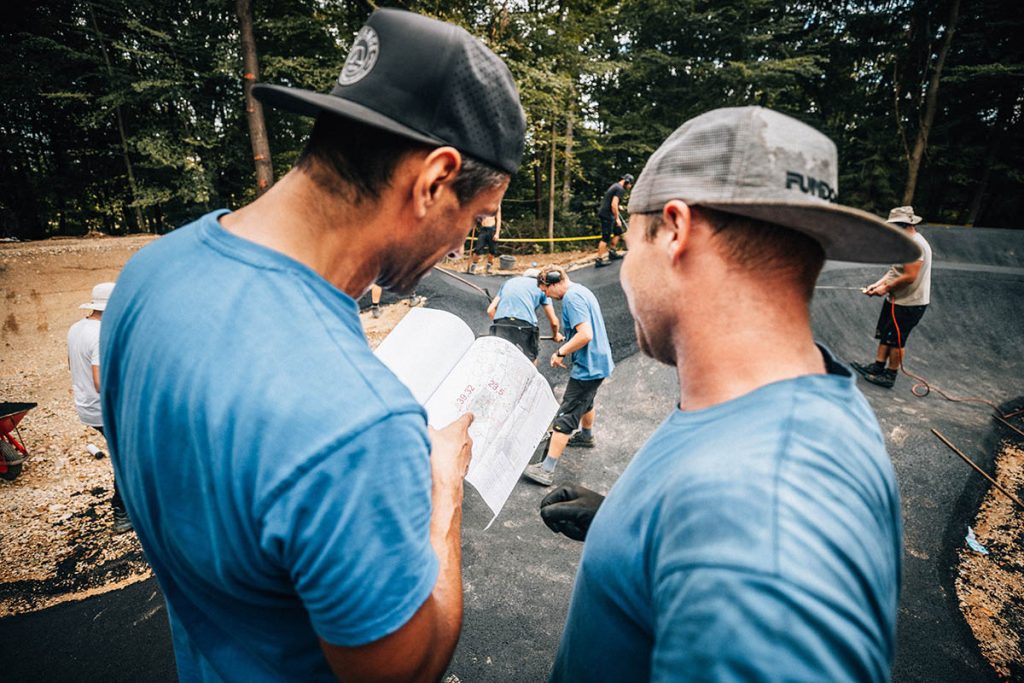
8. Build With Expert Construction Teams
A high-quality asphalt pump track requires professional construction.
Key elements include:
- precise shaping of sub-layers
- correct compaction
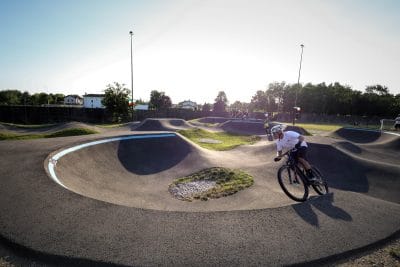
- forming smooth, predictable berms and rollers
- applying high-quality asphalt surfacing
Expert builders ensure the track rides smoothly and lasts for years.
9. Add Surrounding Features and Landscaping
A pump track becomes a community hub when supported by the right surroundings.
Consider:
- benches and seating
- shade or rest areas
- lighting (if allowed)
- bike racks
- green areas
These features make the space welcoming for families, spectators, and events.
10. Provide Maintenance Guidelines and Support
Asphalt pump tracks are low-maintenance, but proper care ensures long life.
We provide municipalities with:
- cleaning instructions
- inspection recommendations
- long-term maintenance advice
Simple upkeep keeps the surface safe and the park looking clean.
✔️ A Pump Track Built With the Community in Mind
A well-planned pump track is more than a sports feature — it is a durable, inclusive, and safe recreational space for riders of all ages. By following these 10 steps, municipalities can ensure they receive a pump track that delivers long-term value, high usage, and strong community engagement.
At Alliance ASE, we support you through every step — from concept to construction — to create the perfect pump track for your community. Contact us and our experts will be happy to explain the process to you in more detail.