How Much Does a Pump Track Cost — and What Does Your Municipality Actually Get?
“How much does a pump track cost?” is often one of the first questions municipalities ask when considering a pump track facility. The honest answer: there’s no single price — it depends on size, terrain, complexity, and amenities. But the more important question isn’t the number itself: What does your community get for that investment, and what’s the cost per user?
Below, we break down both — what drives the price and why a pump track is one of the most cost-effective sports investments a municipality can make today.
What Does a Municipality Actually Buy?
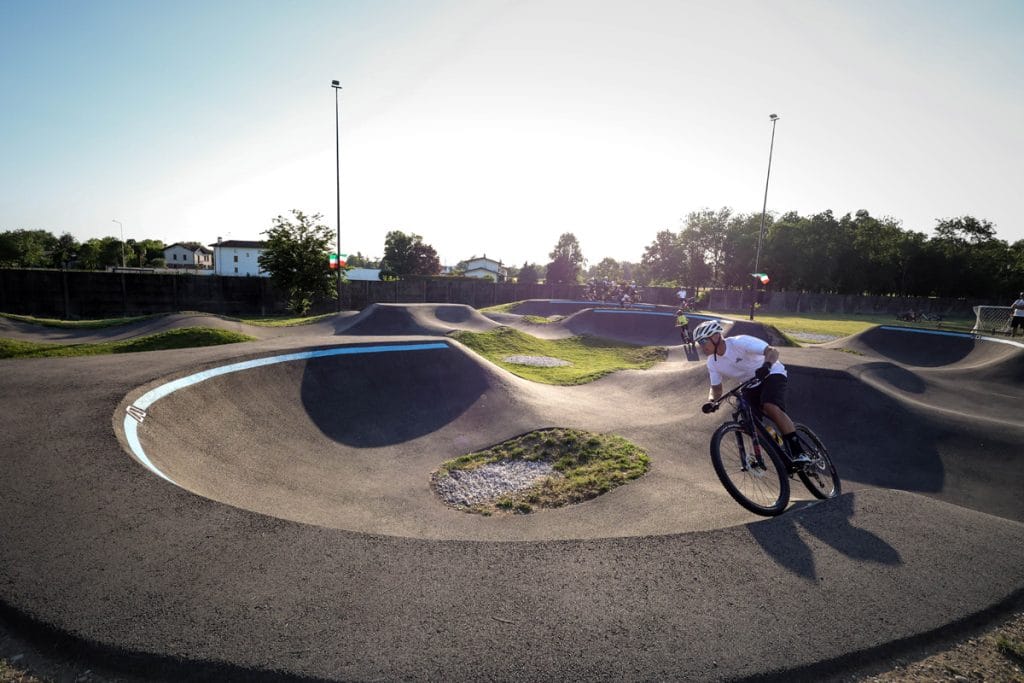
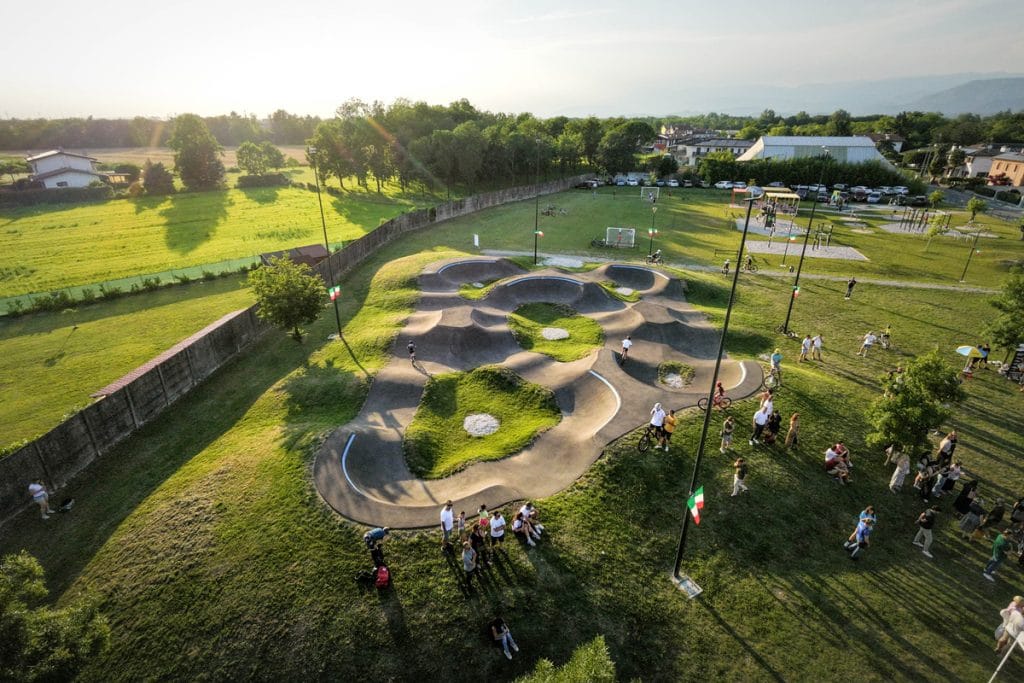
A pump track is more than just an asphalt course with bumps. With it, your municipality gains:
- A space for all generations — bikes, scooters, skateboards, rollerblades, even wheelchairs; from toddlers making their first turns to teens, parents, and competitive athletes;
- A facility that’s always open — no reservations, no membership fees, no schedules, 365 days a year;
- A long lifespan with minimal maintenance;
- A lasting landmark for your community — a recognizable gathering point that locals quickly make their own.
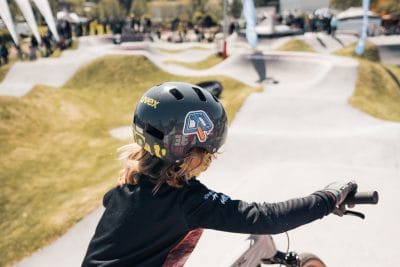
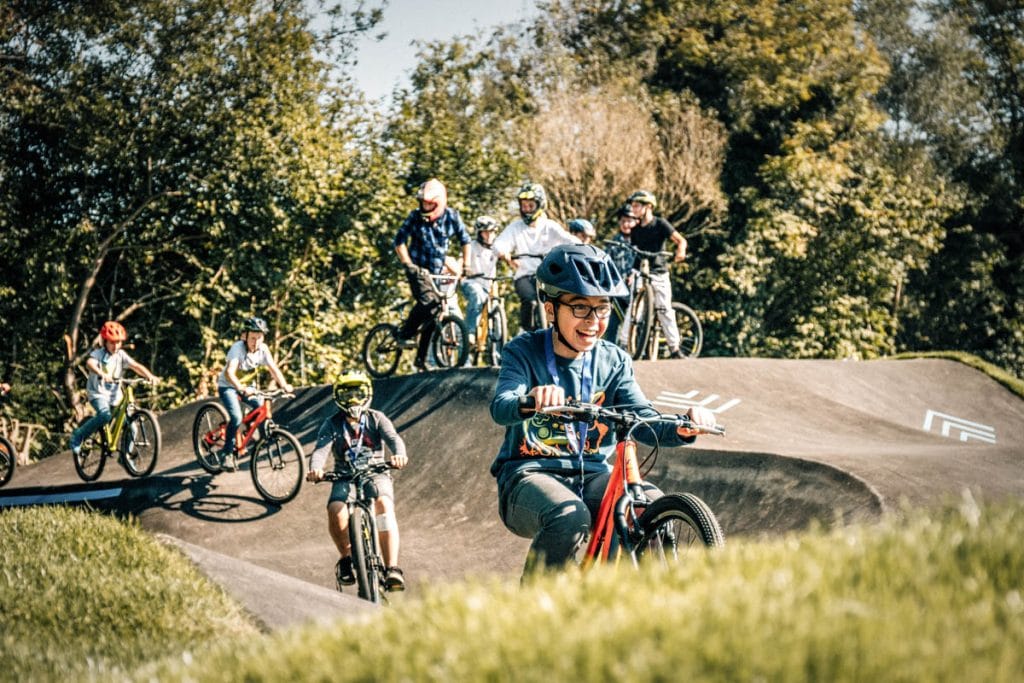
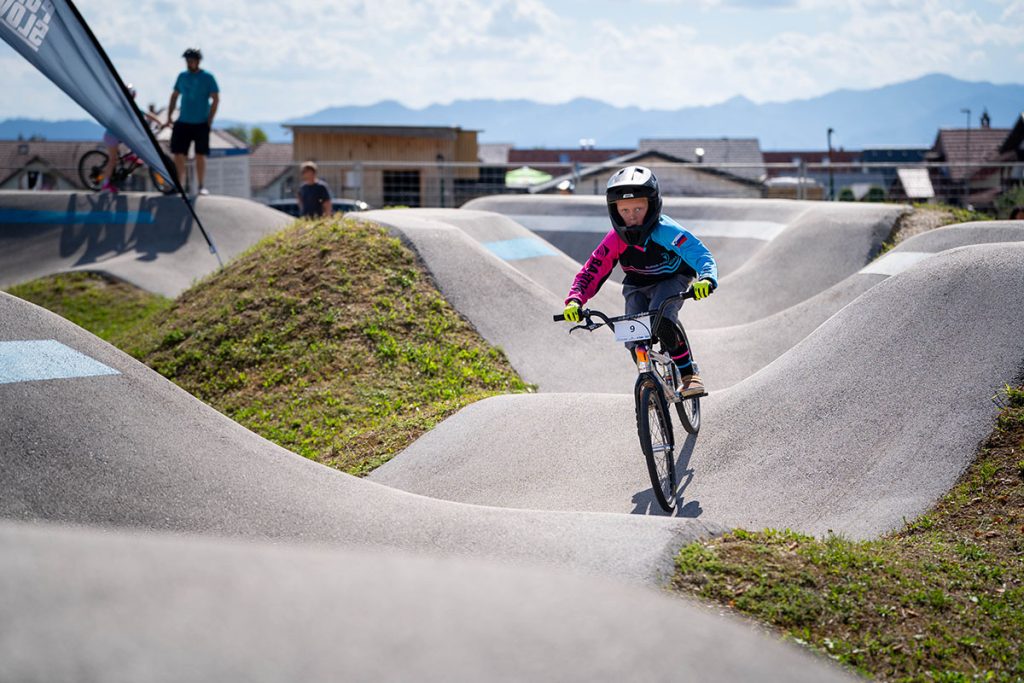
One fact that often goes unnoticed: a large share of pump track users are children. This isn’t an adrenaline venue for a handful of trained cyclists — it’s everyday recreational infrastructure for the widest possible community. That’s exactly what makes a pump track so easy to champion publicly.
The Right Number Isn’t the Total Cost — It’s the Cost Per User
A sports facility is only as valuable as the number of people who use it. That’s why it makes sense to evaluate the investment against user numbers. When you do, you start to see just how low the cost per user can be for a facility that serves many people.
| Facility | Approx. Investment | Simultaneous Users | Access |
| Football pitch (artificial turf + lighting) | ~ 550,000 € | ~ 22 | Reservations, team, season, club |
| Tennis court | ~ 65,000 € | 2 | Reservations, pairs, membership |
| Pump track | ~ 100,000+ € | 10+ | Open access, free, all ages |
The difference becomes clear when you divide the investment by the number of users. A football pitch runs about 25,000 € per simultaneous user, a tennis court over 30,000 € — while a pump track comes in at around 10,000 € or less — two to three times more cost-effective, with significantly broader and more inclusive access.
Put simply: a pump track offers one of the lowest costs per user of any sports facility — with usage that isn’t tied to a single age group, sport, or time slot. One facility can replace several separate setups and bring generations together in one place.
What Drives the Price
The price isn’t arbitrary. Understanding it comes down to a few key factors — and most of them can be turned in your favor when choosing a location.
Size and Complexity of the Course
A larger course means more materials and labor, but also a greater reach — more users and more lines suited to different ages and skill levels. Complexity matters too: courses designed for experienced riders feature higher rollers and steeper, larger berms, which require more materials and work. The goal isn’t ‘biggest and hardest’ — it’s a course that fits the target community.
Location and Terrain
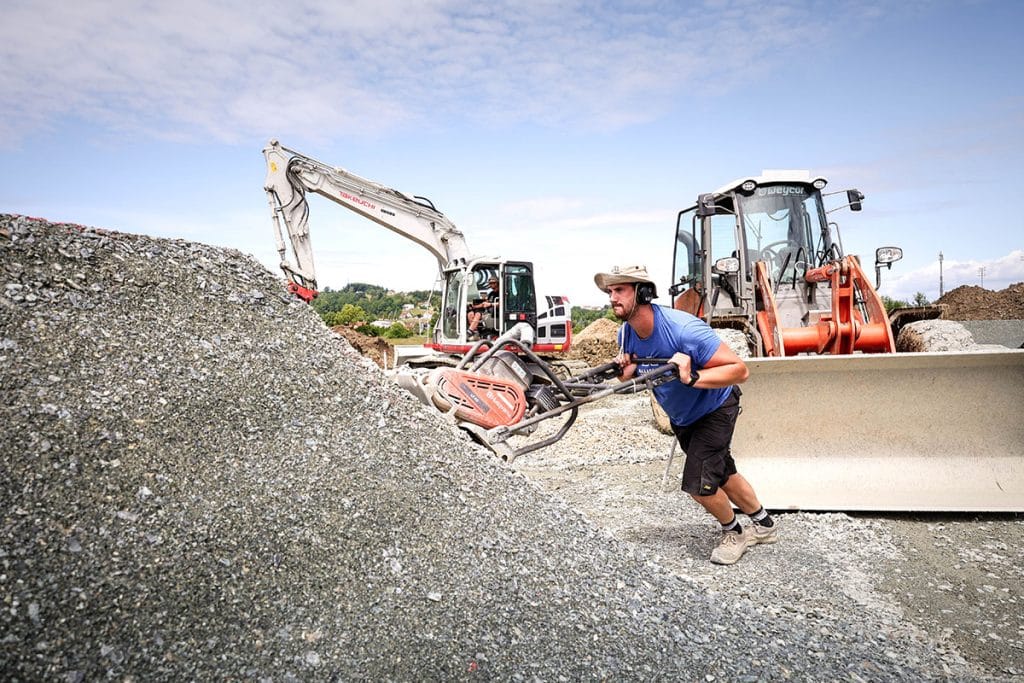
A significant portion of the cost is hidden in the groundwork.
Costs are lower when the terrain is:
- As flat as possible — less earthmoving and leveling required;
- Load-bearing — firm soil doesn’t require expensive replacement or thicker base layers;
- Accessible for trucks and machinery — with enough maneuvering space; difficult access increases costs.
Particularly important is the option to cut the course into the terrain rather than building up mounds on an existing surface. Where soil composition allows, excavated material can be used to shape the rollers — reducing imported materials and transport, and lowering the overall project cost.
Slope Treatment and Landscaping
Slopes are seeded or turfed to prevent erosion and give the facility a finished look. The method chosen affects the final cost:
- Grass seeding — the cheapest option, but slower and less reliable;
- Rolled turf — immediately green and walkable, but more expensive;
- Irrigation system — protects the lawn during dry periods, but increases upfront cost;
- Artificial grass on slopes — highest initial investment, but no mowing or watering required.
A cheaper solution means slower, less reliable results and more ongoing maintenance; a more expensive one means immediate and lasting results.
Lighting and Urban Furniture
Lighting isn’t a requirement, but adding it extends use into evening hours and stretches the season — more hours of use from the same investment. It does affect cost, as does any other site furniture (benches, fencing, bins, shade structures). Each element is a decision between upfront cost and added value.
The Share of Actual Riding Surface
A pump track isn’t all asphalt — the riding track is surrounded by slopes and green areas. When comparing quotes, pay close attention to the proportion of actual rideable (asphalt) surface: two quotes with similar total prices may offer very different amounts of surface that users actually ride on. We recommend comparing quotes by rideable surface area and evaluating the surrounding landscaping separately.

Why the Lowest Price Isn’t the Best Value in the Long Run
Most pump tracks look good at opening day.
The difference between a cheap build and a quality one only becomes apparent a few years down the line. Budget builds eventually reveal where corners were cut: unsuitable materials cause subsidence and cracking, poor drainage leads to standing water, frost damage, and potholes, and unstable slopes cause edge cracking. Fixing these issues costs more than the original savings — and that bill falls on the municipal budget.
Industry rule of thumb: With poor base preparation, an asphalt course lasts 2–5 years. With proper base preparation, sub-base construction, and drainage, it lasts 15 years or more. What matters most is how the facility is built and what materials are used.
Our Commitment to Quality
- 7-year warranty — the longest in the industry. The risk of proper base preparation and drainage is ours, not your budget’s.
- Independent safety inspection of every course and compliance with European standards.
- More than 350 completed projects in Slovenia and across Europe — proven technology and an experienced team.
- Minimal maintenance: unlike dirt pump tracks, asphalt requires very little upkeep.
A question worth asking: will the cheapest bidder still be in business seven years from now — and ready to respond if the facility needs attention?
An Investment You’ll Be Proud to Stand Behind
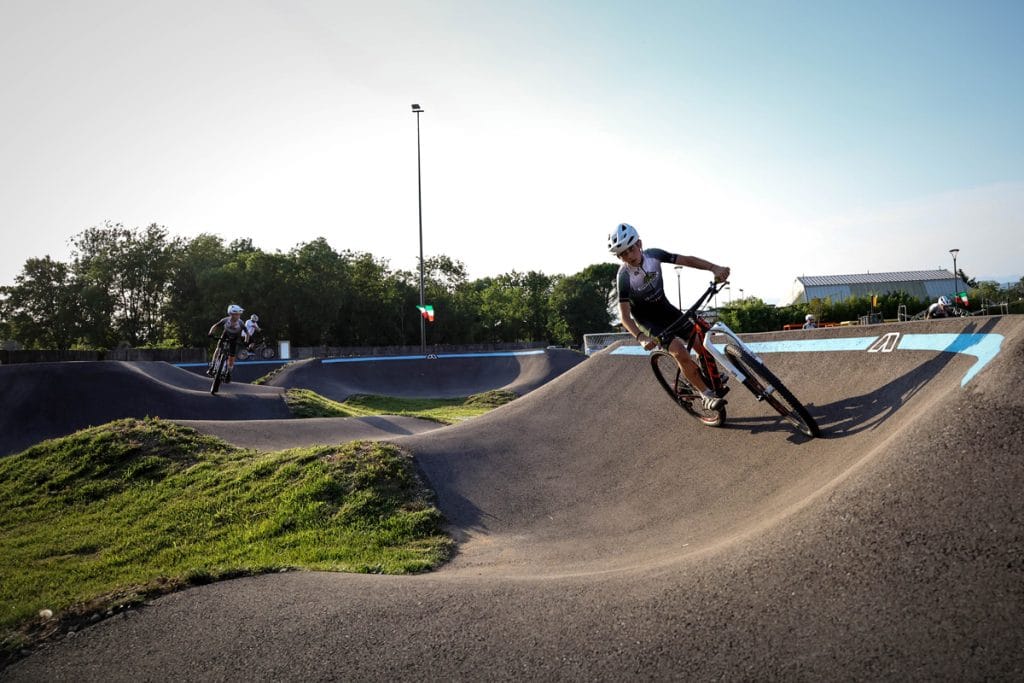
A pump track is one of those rare municipal projects that combines durability, broad accessibility, and visible community value all in one.
For decision-makers, that means an investment that’s easy to explain — to residents, the media, and the council: a facility used by all generations, one that becomes a landmark for the community.
In many cases, co-financing is available through national or EU funding programs. We can assist with grant documentation and funding research, as well as a complete turnkey solution — from design and construction to the opening event and promotion.
Plan Your Pump Track With Confidence
Initial consultations are free of charge. Based on your location and broad goals, we’ll prepare a free layout concept and preliminary cost estimate — with no obligations. Get in touch with us today.