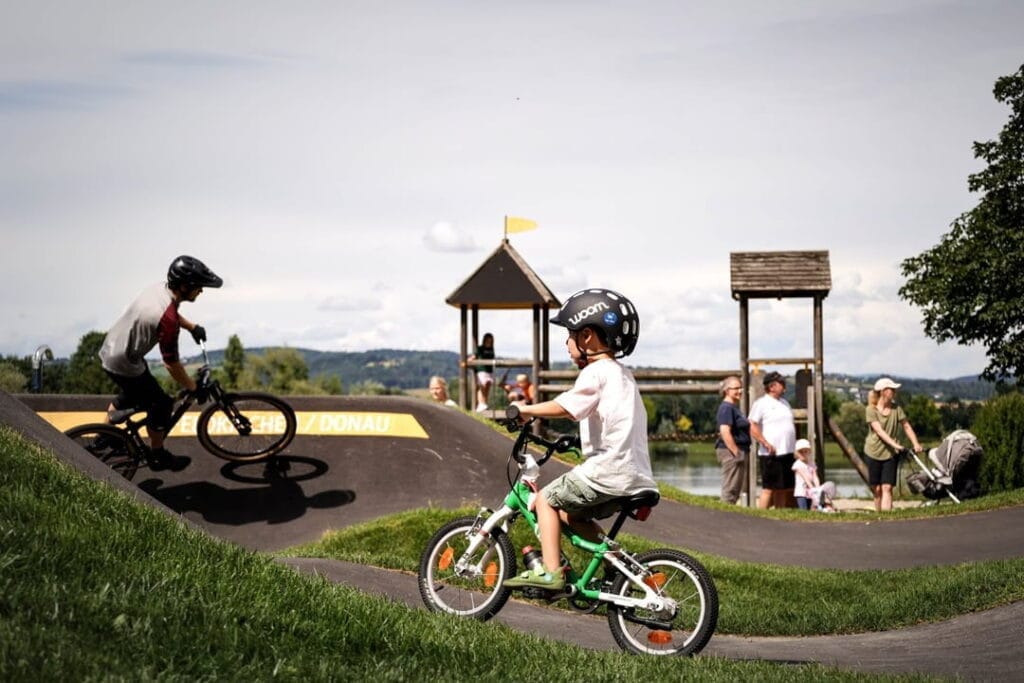
5 Myths About Pump Tracks — And the Truth Behind Them
As pump tracks become more common in cities and communities, many people still misunderstand what they are, who can use them, and what they cost. To help municipalities and investors make informed decisions, here are five of the most common myths — and the facts that show why asphalt pump tracks are a smart, modern investment.
Myth 1: Pump Tracks Are Only for Bikes
Reality: Pump tracks are for all wheels.
While pump tracks became popular in the cycling world, today they are designed for much broader use. An asphalt pump track welcomes:
- bikes and balance bikes
- scooters
- skateboards
- roller skates and inline skates
- wheelchairs (on accessible sections)
This makes them inclusive public spaces used by children, teens, families, and adults — far beyond the cycling community.

Myth 2: Pump Tracks Are Dangerous
Reality: Pump tracks are safer than many traditional sports surfaces.
Modern pump tracks are built with smooth, predictable shapes and asphalt surfacing, which reduce slipping, falling, and sudden obstacles. They are specifically designed for:
- controlled speed
- clear visibility
- natural flow without sharp edges
- predictable movement patterns
Compared to skateparks or dirt trails, asphalt pump tracks require less technical skill and provide a stable surface, making them safe for riders of all ages — especially beginners.

Myth 3: Pump Tracks Are Expensive to Maintain
Reality: Asphalt pump tracks require very low maintenance.
Dirt tracks can erode, get muddy, and need frequent repairs. Asphalt pump tracks do not. Municipalities appreciate them because they offer:
- long-term durability
- minimal upkeep
- year-round reliability (weather permitting)
Other than clearing debris, simple cleaning, and routine visual inspections, the track typically needs no significant maintenance for many years.

Myth 4: Pump Tracks Are Only for Experienced Riders
Reality: Pump tracks are designed for all ages and abilities.
Young children on scooters, beginners on bikes, teens on skateboards, and adults returning to recreational sports — all can use a pump track comfortably. Riders naturally build skills and confidence at their own pace.
This makes a pump track a valuable community learning space, not just a sports facility for advanced users.

Myth 5: Pump Tracks Take Up Too Much Space
Reality: Pump tracks are highly flexible and can fit even in small plots.
A pump track can be built to match the available space:
- small plots for young users and beginner loops
- medium-sized tracks for mixed-age groups
- large, multi-loop designs for communities wanting a high-capacity attraction
This flexibility makes pump tracks a smart solution for underused or irregular spaces — including parks, old sport fields, or unused urban corners.

✔️ The Truth: Pump Tracks Are a Smart, Long-Term Community Investment
For municipalities and investors, asphalt pump tracks offer:
- high community engagement
- inclusive recreation for all ages
- low long-term maintenance
- strong durability
- year-round usability
- the ability to host events and education programs
Pump tracks are more than a sports feature — they are a safe, accessible, multi-use public space that encourages healthy living and brings people together.
Ready to learn more about bringing a pump track to your community, school, or business? Contact us today for a free consultation!